Showing posts with label squash. Show all posts

Wednesday, June 3, 2009

Harvest: 6/3/09

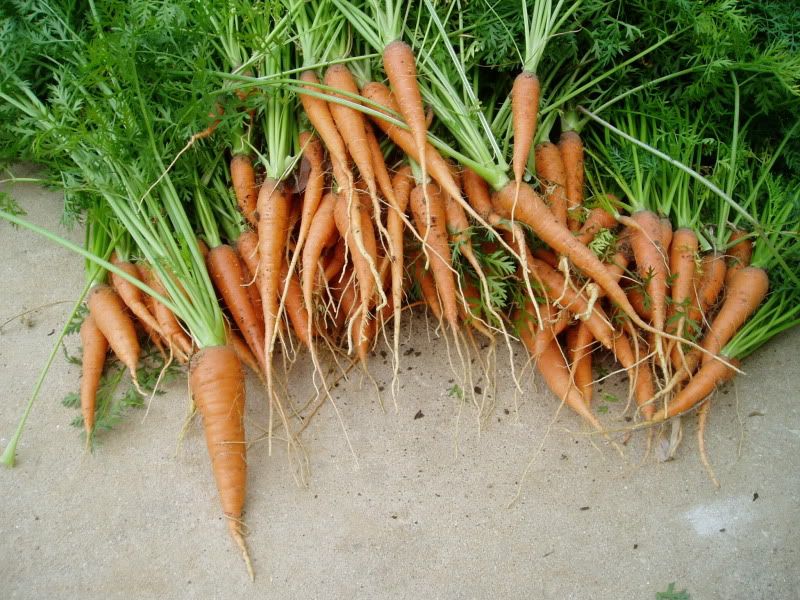
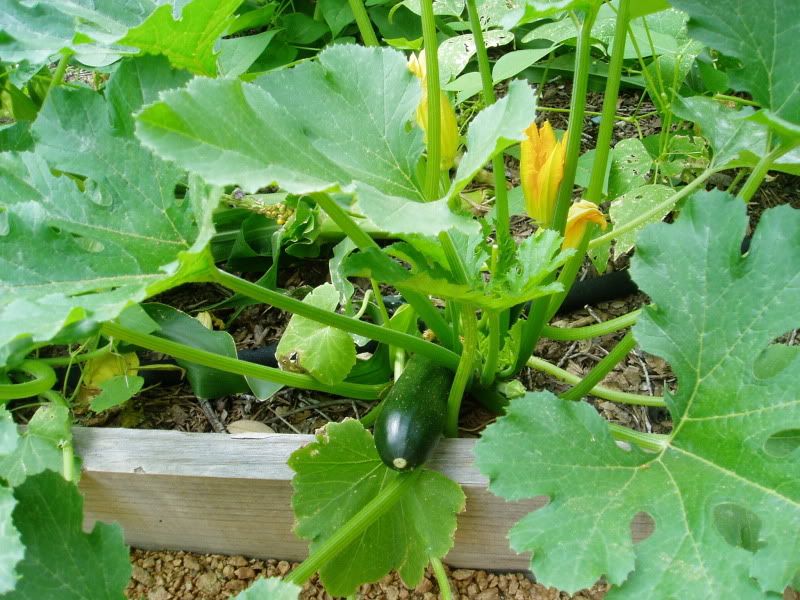
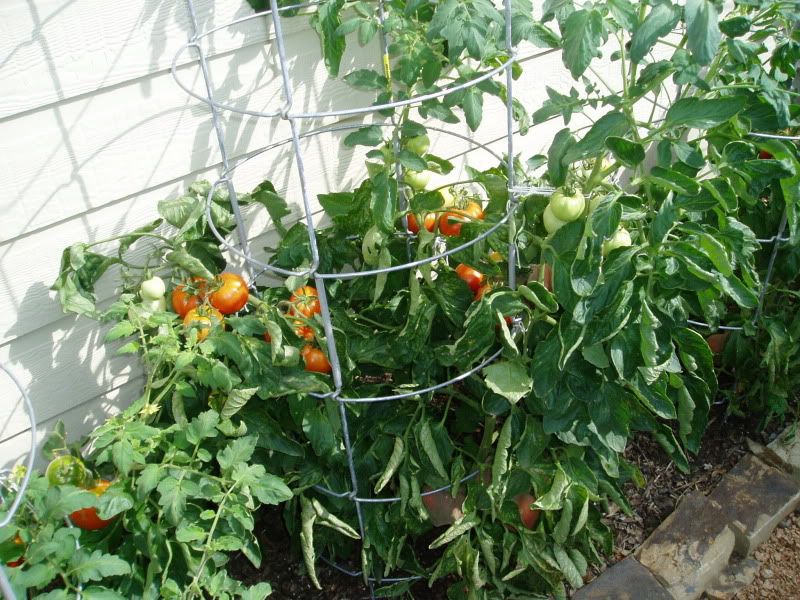
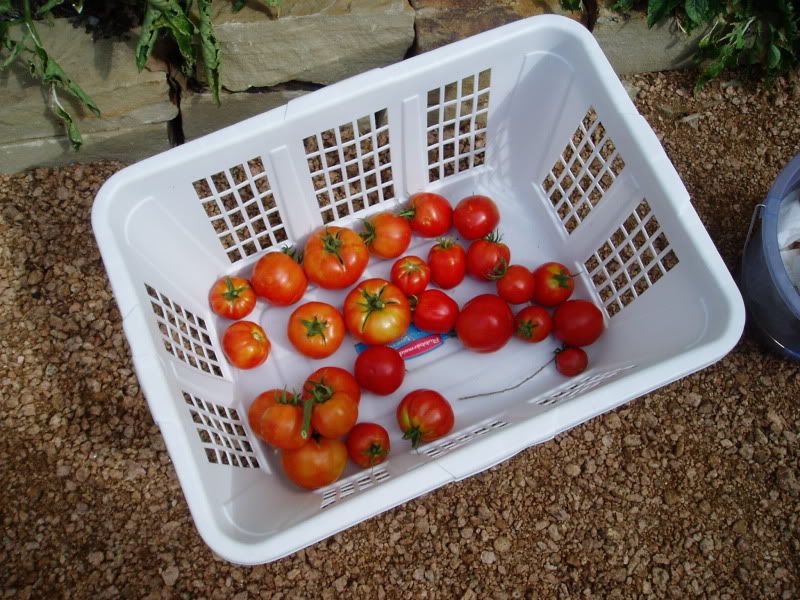
Well, I pulled up the onions and carrots because the soil temp is preventing them from getting any bigger. The onions were a bust (the largest bulb being only 2 inches across), I think I will try planting them again in the fall. The carrots turned out better than I thought though - pretty good for a spring garden in south Texas. I also picked some tomatoes and my first squash. De-lish!


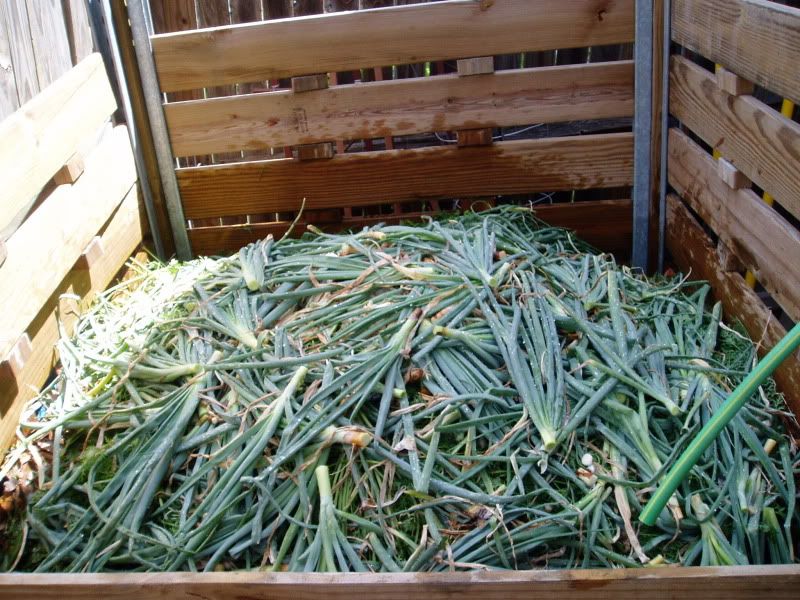
Nothing is wasted! The tops of the carrots and onions are now the top layer in the compost bin :)

Thursday, May 7, 2009

Photolog 5/7/09: The birds and the bees of corn and ladybugs

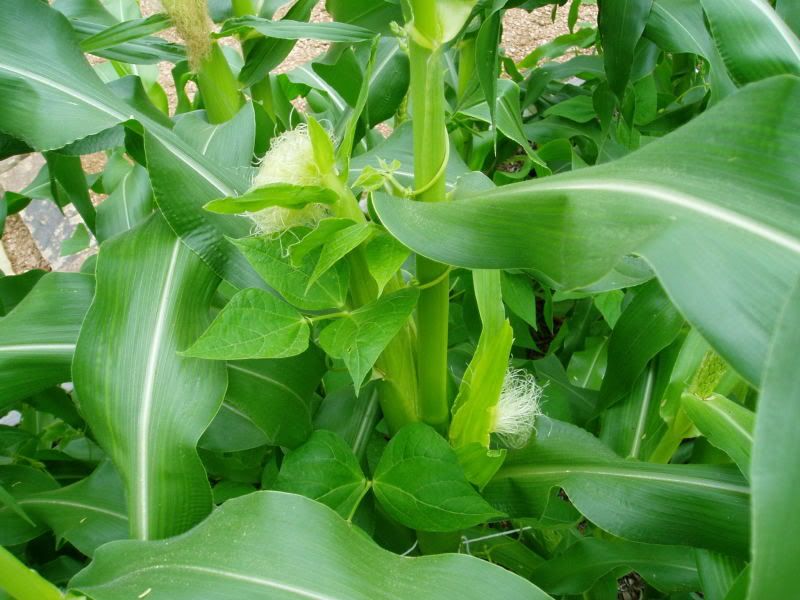
After a few days of rainy weather the sweet corn has sent out it's male and female flowers (tassels and silk, respectively). The tassels drop pollen down onto the silk, each string of silk fertilizing a single corn kernel. To maximize fertilization one should always plant "blocks" of corn (as opposed to a long, singular row) because one corn plant can fertilize another. This way you will get nicely filled ears.


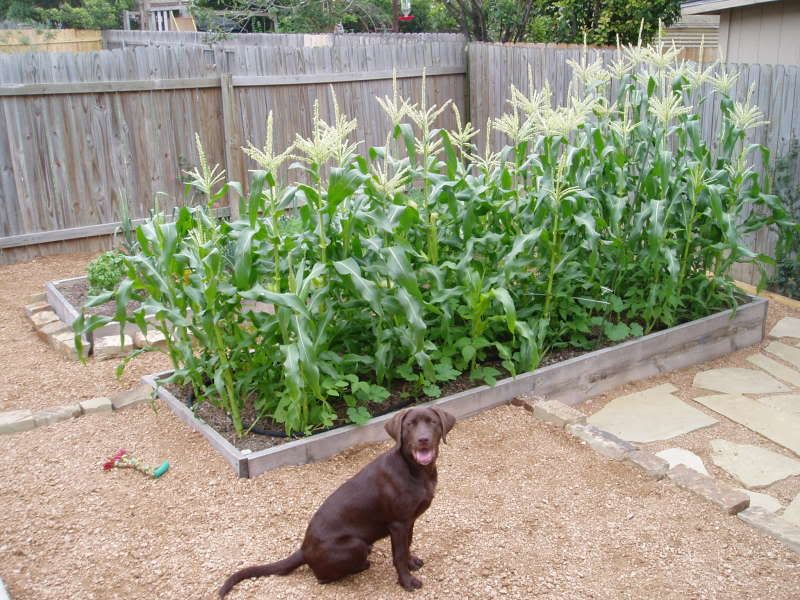
Bailey by the garden


First red tomato!


This corn stalk will make two ears! Probably a result of high fertility and proper spacing. Look how the peas wrap their way up the stalk. Down below their roots are all entangled and the nitrogen-fixing bacteria grown by the peas are fertilizing the corn.


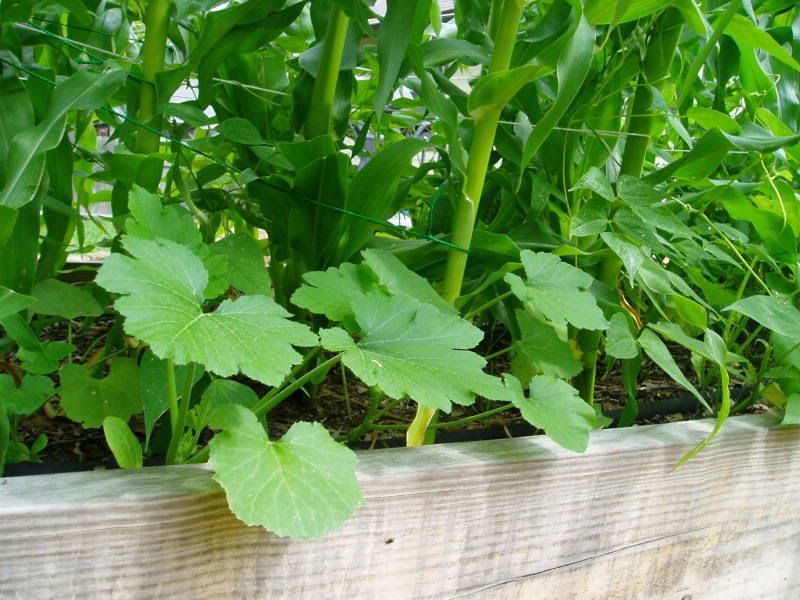
And the third sister: squash. They are leaning out of the shade in an attempt to get at the light.


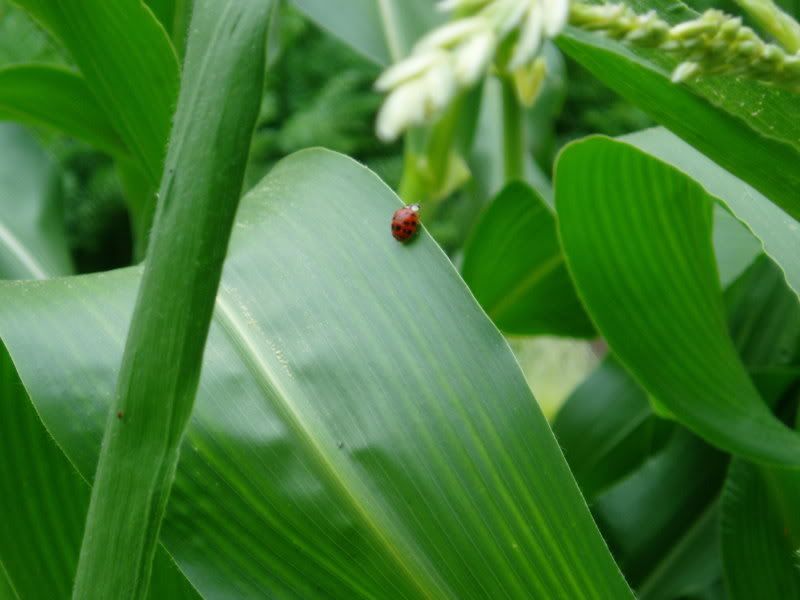
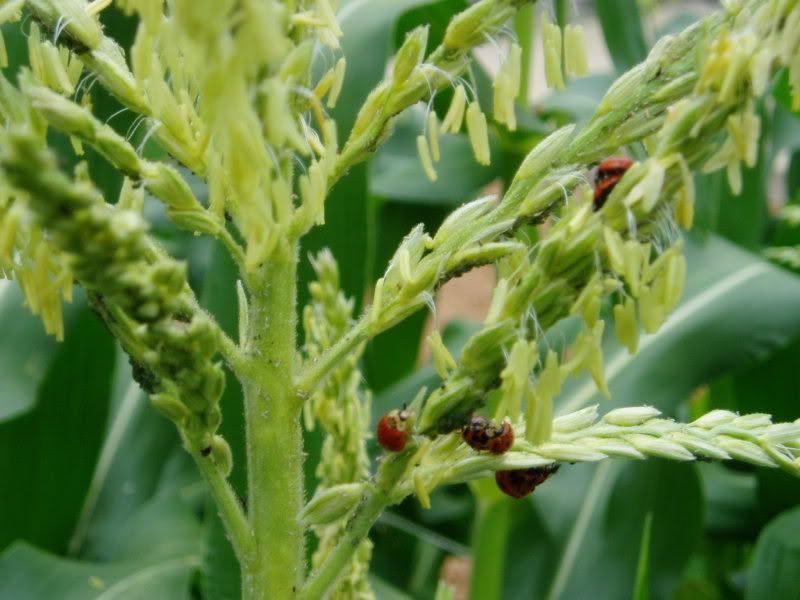
Aphids love to gather around corn tassels and suck at the sugary sap (they look like little green fleas that all pile on top of one another). Left unchecked, they can really do some damage because they reproduce exponentially (I'm talking billions of descendants). Good thing for me, ladybugs eat aphids (plus they are a sign of good luck!). At first we only had a few ladybugs, but now there's probably thirty or so red-bodied aphid-eating machines out there. They mate and lay their eggs near their prey so their babies have something to eat when they hatch. Oh mother nature, I guess there's always a bigger bug...

Now try to imagine if I had sprayed nasty chemicals at the first sight of those aphids. The few lady bugs would have been killed too and the aphids (which reproduce way faster) would have come back with no natural predators to keep them in check.

Aphids vs Ladybugs on a corn tassel.

Tuesday, April 28, 2009

Photolog 4/28/2009: 3 Sisters Update

The last post was quite lengthy, and I imagine that most people (myself included) simply scrolled down the blog while looking at the pictures. If you read the whole thing (God bless you) then you have too much free time. So here is what we all want to see, mostly pictures! Abbey and I have been doing lot's of landscaping in the backyard, so things may look a little different...

With all the rain everything is very green and growing like crazy! My Three Sisters garden is booming. This companion-planting technique was used by the Native Americans to grow all kinds of plants (mostly corn, beans, and squash). To plant a Three Sisters garden you need to plant a "square" of corn. When the corn is about 8 inches tall, plant pole-beans between each corn stalk. When the first of the pole-beans sprout plant squash around the outside or wherever there's a sunny spot. The corn will continue to grow and will support the pole-beans, the pole beans will grow nitrogen-trapping bacteria along their roots, which is like a living fertilizer, and the squash will creep around low looking for light and will crowd out any weeds. It works! You can also bury some fish real deep in the garden before planting if you want to really feel like a Native American (this acts as a source of fertilizer).
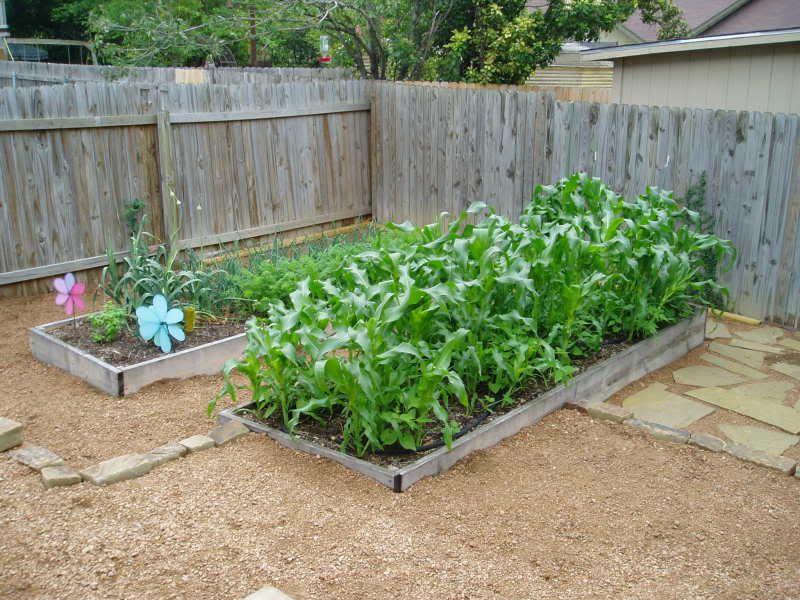


The Three Sisters Corn, Beans (the triangular-flat leaves) and Squash (lower middle-right)


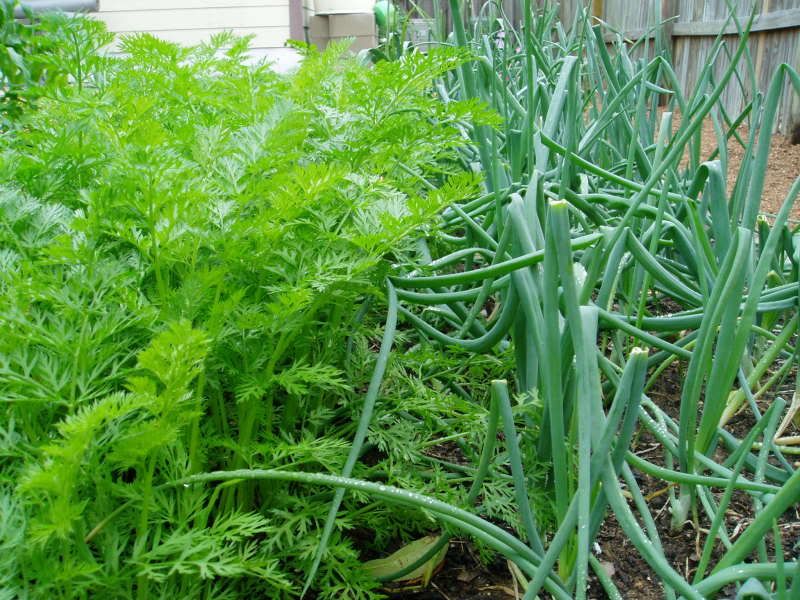
Carrots (left) and Onions (right)


Tomatoes
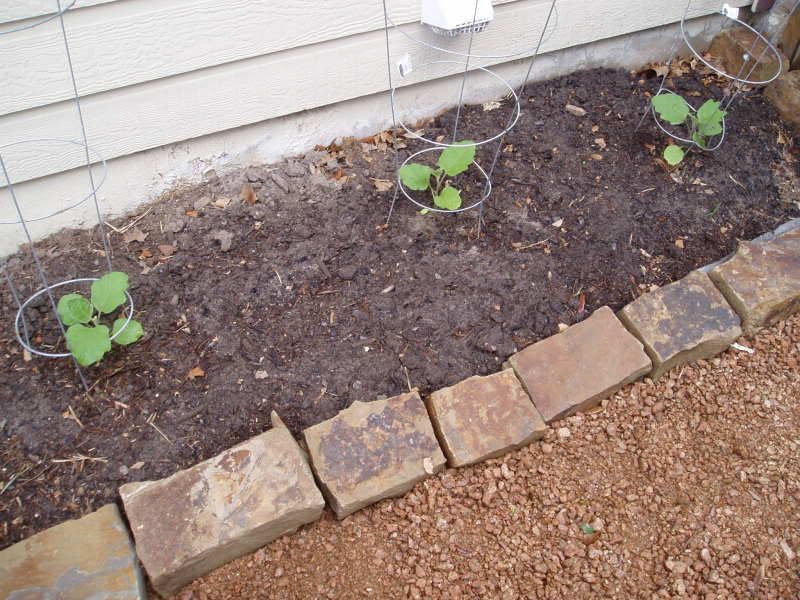

Eggplant
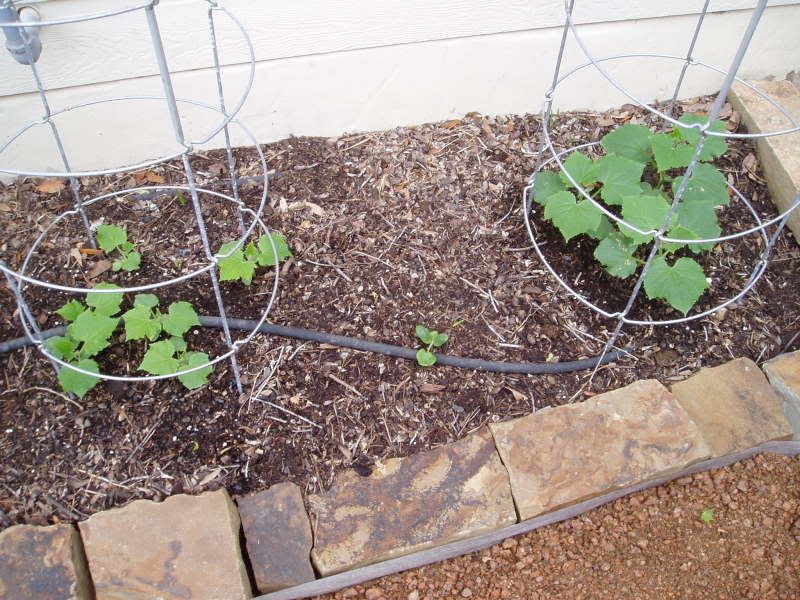

Cucumbers with a squash in between
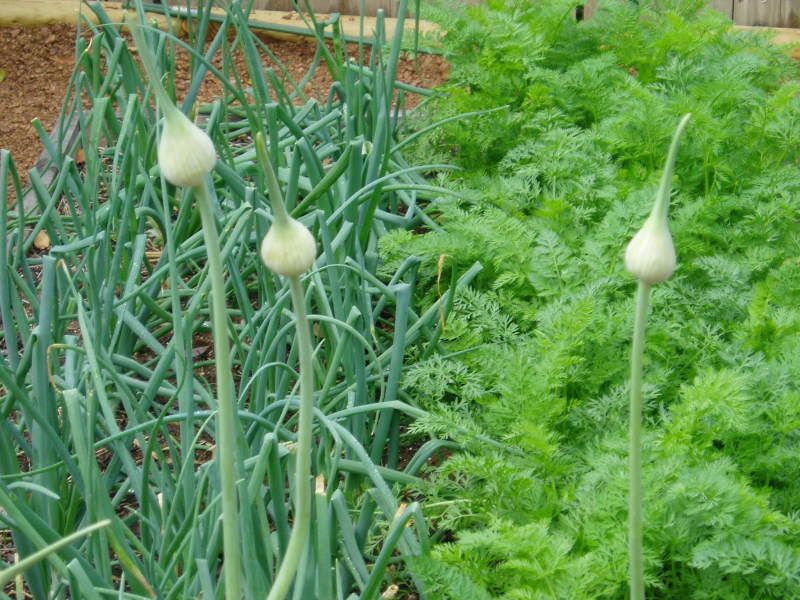

Garlic sacpes. These will taste great when I sauté them in butter!


Bailey by the Three Sisters garden. She has also been growing exponentially! Can you tell which end of the garden I buried the fish at? I didn't think it would make that big a difference...